Hikvision AcuSense technology is the answer to the single most common reason people stop trusting their cameras: the flood of false alarms. Understanding how AcuSense uses AI to eliminate false alarms explains why a camera can buzz your phone at 3 a.m. for a real intruder and stay silent for the cat, the shadow and the windblown bag. AcuSense is Hikvision's on-board deep-learning engine that looks at every moving object and classifies it — human, vehicle, or something else — then alarms only for the classes you chose. The result is a security system whose alerts you actually believe, plus a search tool that turns a day of footage into seconds. This guide explains how it works, what it does brilliantly, and its honest limits.
Key takeaways
- AcuSense classifies moving objects as human or vehicle on the camera itself, before it alarms.
- It filters out the animals, weather and shadows that make ordinary motion alerts useless.
- Target search jumps to every human or vehicle event in seconds instead of scrubbing hours.
- Strobe-and-siren models add active deterrence — a live warning the moment a person is detected.
- It is classification, not identity — it knows a human, never which human.
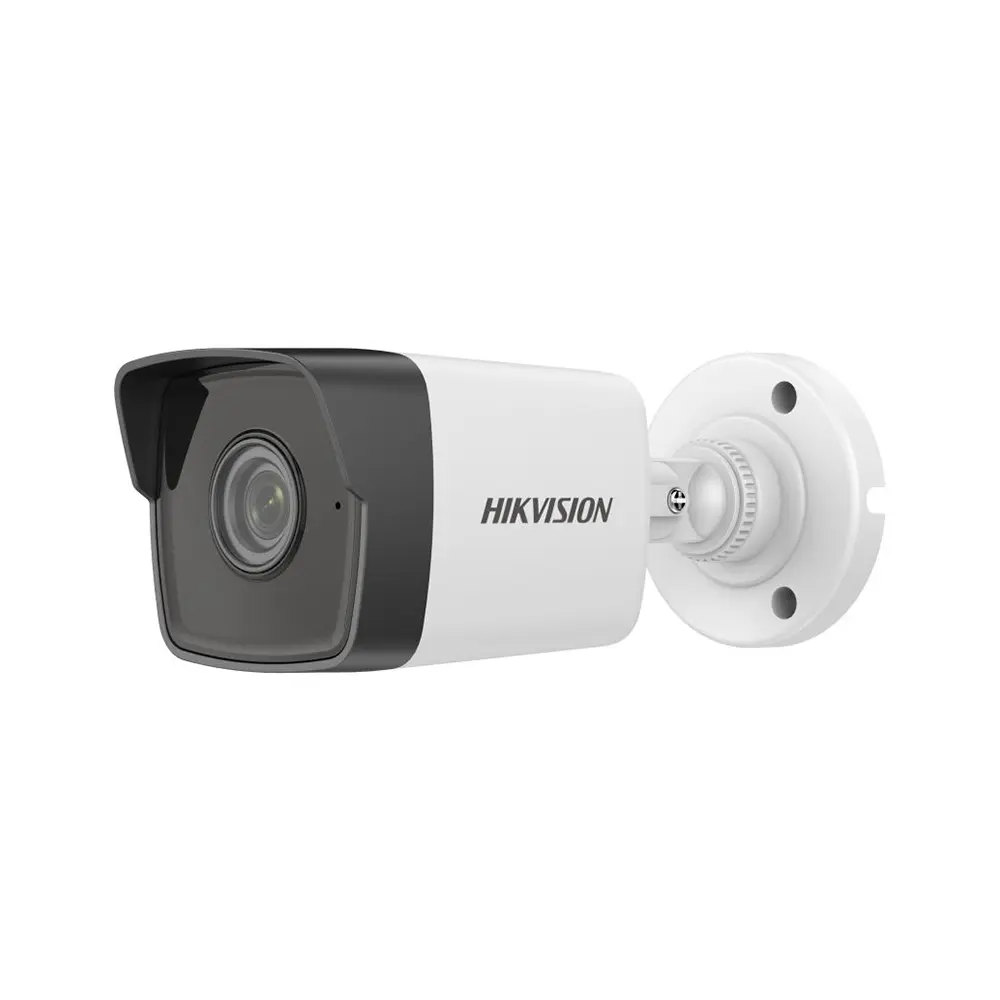
AcuSense cameras filter alarms into people and vehicles
The problem AcuSense was built to kill
Ordinary motion detection reacts to any pixel change: a branch swaying, headlights sweeping a wall, rain, a cat crossing the yard, an insect on the lens. In an outdoor Egyptian installation that means dozens of alerts a night, and every installer knows the arc — the owner opens every notification in week one, and by week five the alerts are switched off. From that moment the system records incidents but warns nobody. AcuSense exists to break that cycle: by deciding whether the moving thing is actually a human or a vehicle before it raises an alarm, it removes the noise that trained people to ignore their own security system.
How AcuSense works
AcuSense runs a deep-learning model directly on the camera or recorder. When something moves, the model examines its shape and behavior and classifies it: human, vehicle, or other. You then choose which classes matter per camera and per schedule — humans only after closing, humans and vehicles at the gate around the clock — and the system raises alarms exclusively for those. Everything else is still recorded normally; it simply stops interrupting you. Because the intelligence lives on the device, this happens in real time with no cloud dependency, and it works over the camera's IR or ColorVu image so it keeps deciding correctly through the night, which is when it matters most.
What you get beyond fewer alarms
- Target search: filter a whole day's recording to just the human or vehicle events, turning an hour of scrubbing into seconds.
- Active deterrence: on strobe-and-siren models, a detected person at night triggers a light and a voice warning automatically.
- Cleaner analytics: line crossing and intrusion zones become reliable because only humans and vehicles trip them.
- Trustworthy notifications: because the alerts are real, people keep them on — which is the whole point of an alarm.
AcuSense in the camera or the recorder?
AcuSense lives in two places, and the difference shapes an upgrade. AcuSense cameras carry the intelligence themselves, classify most accurately, and are where the strobe-and-siren active-deterrence option lives. An AcuSense NVR applies the smarts to ordinary IP cameras you already own — the affordable path to add filtering to an existing system, usually on a limited number of channels. Analog owners are not left out: TurboHD DVRs with AcuSense bring the same filtering to coax systems. The upgrade we quote most often: keep your cameras, swap the recorder for an AcuSense NVR — or replace just the gate camera with a strobe model and keep everything else.
The honest limits
AcuSense is statistics, not certainty. Classification weakens at extreme distances and steep angles, in heavy rain or fog, and when a person is mostly hidden behind objects — so mounting height and a sensible angle are part of its accuracy. It answers human or not human, never which human; recognizing specific identities is a different, heavier product class. And it cannot rescue a poor image: a camera that sees noise at night classifies noise, so it needs proper IR or ColorVu underneath it. Installed thoughtfully, expect a dramatic drop in nonsense alerts — not a divine guarantee. Treat it as a tool that rewards correct placement, and it transforms how much you trust your system.
A compound that got its nights back
A gated compound we service had disabled its perimeter alerts entirely — the old motion system fired so often on stray dogs, blown palm fronds and passing headlights that the security office simply muted everything and relied on patrols. We upgraded the fence-line cameras to AcuSense models with strobe-and-siren active deterrence. Now the perimeter alarms only on a classified human crossing the line, the guard office trusts every alert enough to act on it, and at night a person climbing the fence is met automatically by a light and a spoken warning before a guard even arrives. False alarms dropped from dozens a night to nearly none, and — the real measure — the alerts are switched back on and staying on. A muted alarm protects no one; AcuSense is what made theirs worth listening to again.
That is the whole value in one story: AcuSense does not just cut false alarms, it makes a security system trustworthy enough that people leave it armed — which is the only state in which an alarm actually protects anything.
Smart detection filters motion noise into people and vehicle alerts only
Frequently asked questions
Does AcuSense stop recording animals and cars?
No — everything is still recorded exactly as before. The classification decides who gets to interrupt your evening with an alarm, not what gets stored on the drive.
Can I add AcuSense to my current system?
Almost always: an AcuSense NVR under your existing cameras, or AcuSense cameras at the critical points feeding your current recorder. Bring your system details and we will map the cheapest honest path.
Does it work in the dark?
Yes — night is its prime shift, working over the IR or ColorVu image. The better the night picture, the sharper the classification, which is another reason not to starve the camera of light.
Is AcuSense the same as face recognition?
No. AcuSense answers human or not human; it never identifies who the person is. Face recognition is a separate product category with its own hardware, cost and privacy responsibilities.
Sources and Further Reading
Related guides
- AcuSense vs regular cameras: is smart detection worth it
- Smart video analytics: line crossing, intrusion and more
- ColorVu vs IR night vision: which is better
- Top 5 Hikvision outdoor cameras in 2026
- Hikvision DS-7600 NVR Series
Count last night's false alarms
Count the notifications your system sent last night, then count the ones that deserved your attention — that gap is exactly what AcuSense closes. FastEgy, Hikvision's authorized distributor in Egypt, stocks AcuSense cameras and recorders and will spec the upgrade for your exact system. Start at the contact page or browse AcuSense models with local warranty in the FastEgy store.